Introduction to SKYBIZ Chart Of Payroll
A chart of payroll serves as the foundational architecture within a payroll system, designed to define, standardize, and control every category of payment an employee can receive. Acting as a centralized reference directory, it logs all distinct pay components—ranging from fixed earnings like basic salary and shift allowances to variable payments such as overtime, bonuses, commissions, and statutory holiday or sick pay. By establishing a uniform list of pay types, the chart of payroll eliminates ambiguity, ensuring that every financial disbursement is categorized consistently across the entire organization. This structural uniformity prevents manual errors, mitigates the risk of duplicate entries, and streamlines the onboarding of new compensation structures.
Beyond simple categorization, the chart of payroll is the engine that drives automated calculations, compliance, and financial reporting. Each defined pay item is mapped to specific computational, tax, and statutory contribution rules, instructing the system on whether a component is subject to taxation or eligible for funds like EPF and SOCSO. When processing payroll, the system relies on these pre-configured parameters to accurately calculate net pay and deductions without requiring manual intervention. Furthermore, this granular tracking feeds directly into general ledger mapping and reporting tools, allowing organizations to generate clear, compliant payroll reports that break down expenditures by salary, overtime, and allowances for precise auditing and strategic budgeting.
How to update the payment type?
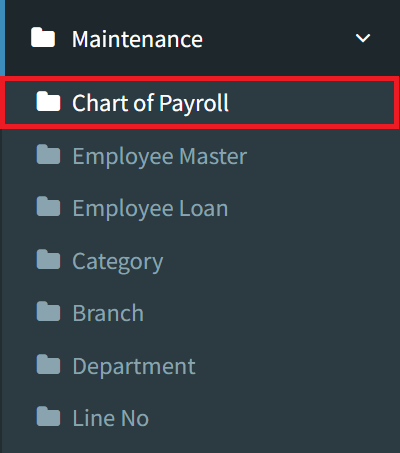
Step 1: Navigate to Maintenance > Chart of Payroll
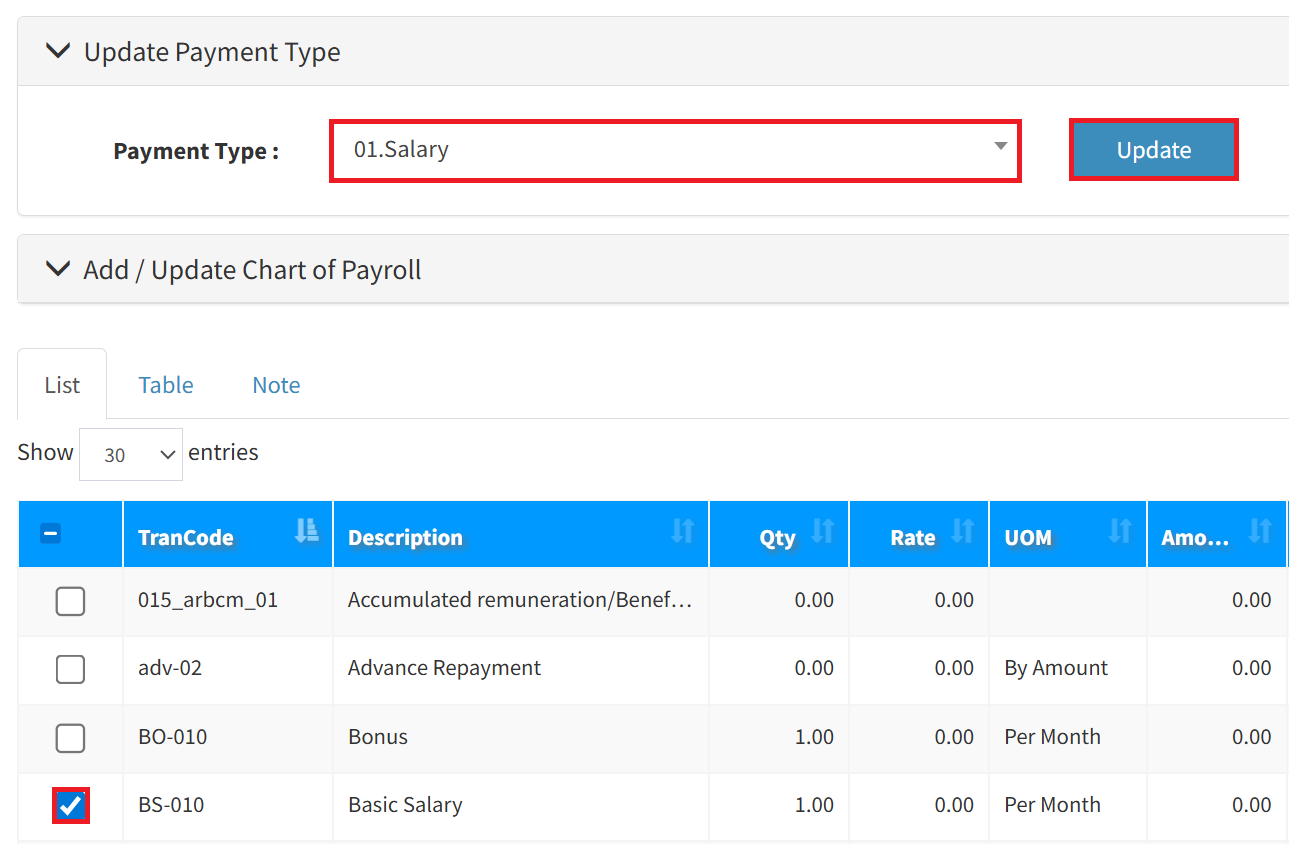
Step 2: Select your desired payment type (e.g., Salary). Under the Chart of Payroll section, check the box for the specific item you want to include (e.g., Basic Salary), then click the Update button to save your changes.
Conclusion
Ultimately, a chart of payroll is the critical link between raw compensation data and accurate financial execution. By defining what payments exist, dictating how they are treated under tax and statutory laws, and automating their calculation, it transforms a complex regulatory minefield into a repeatable, error-free process. Without this structured framework, maintaining compliance and generating clean financial reports would require unsustainable manual oversight.
Powered By: SKYBIZ ®