Introduction to SKYBIZ Delivery Order
A Delivery Order (DO) is a document issued by a seller, supplier, or logistics provider to authorize the release or delivery of goods to a customer. It contains key details such as the recipient’s name and address, product descriptions, quantities, delivery date, and reference to the related sales order or invoice. While it is not a billing document, the delivery order serves as proof that goods have been dispatched or delivered. In accounting and inventory management, delivery orders help track the movement of goods, update stock levels, and support the billing process by linking deliveries to sales invoices.
How to Create a Delivery Order?
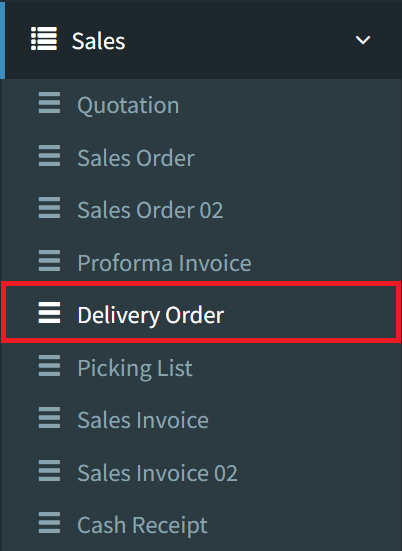
Step 1: To create a delivery order, navigate to Sales > Delivery Order
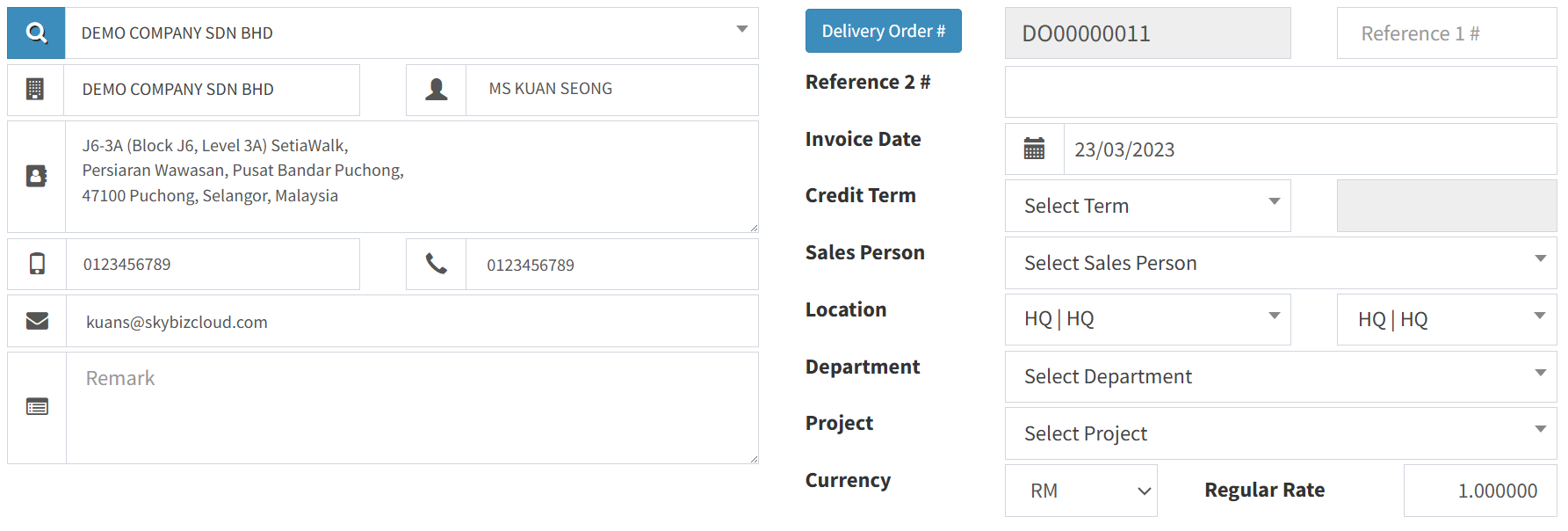
Step 2: Fill in all fields with your customer information
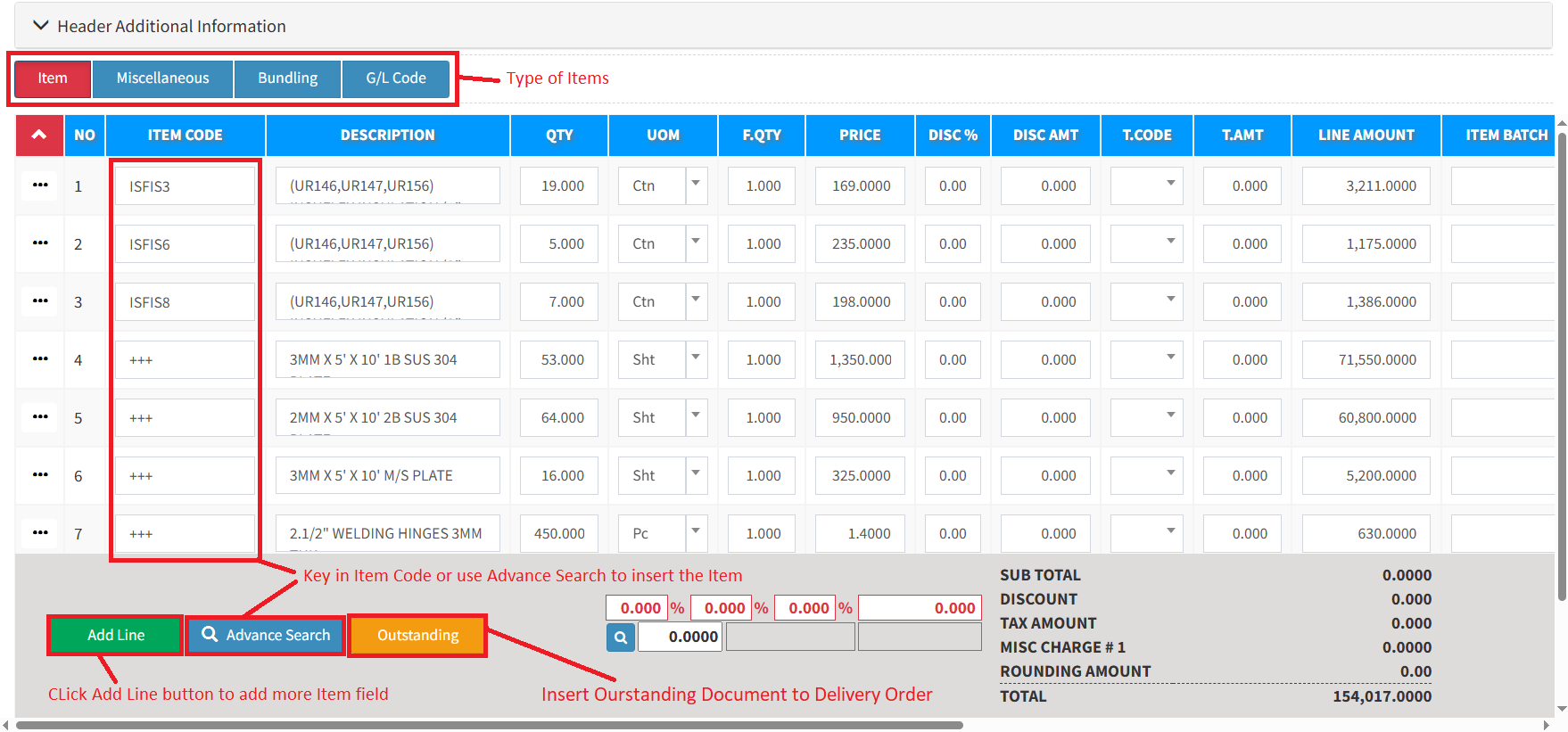
Step 3: Select the item type, then add all kinds of inventory items/miscellaneous/GL that you want to add:
- The Item = All general or standard inventory items. Basically, for every product that has stock.
- The Miscellaneous = All non-Inventory Items such as labour charges, transport charges, project services, and more.
- The Bundling = All bundling items that you have created.
- The G/L Code = Retrieve preset from the chart of accounts code.
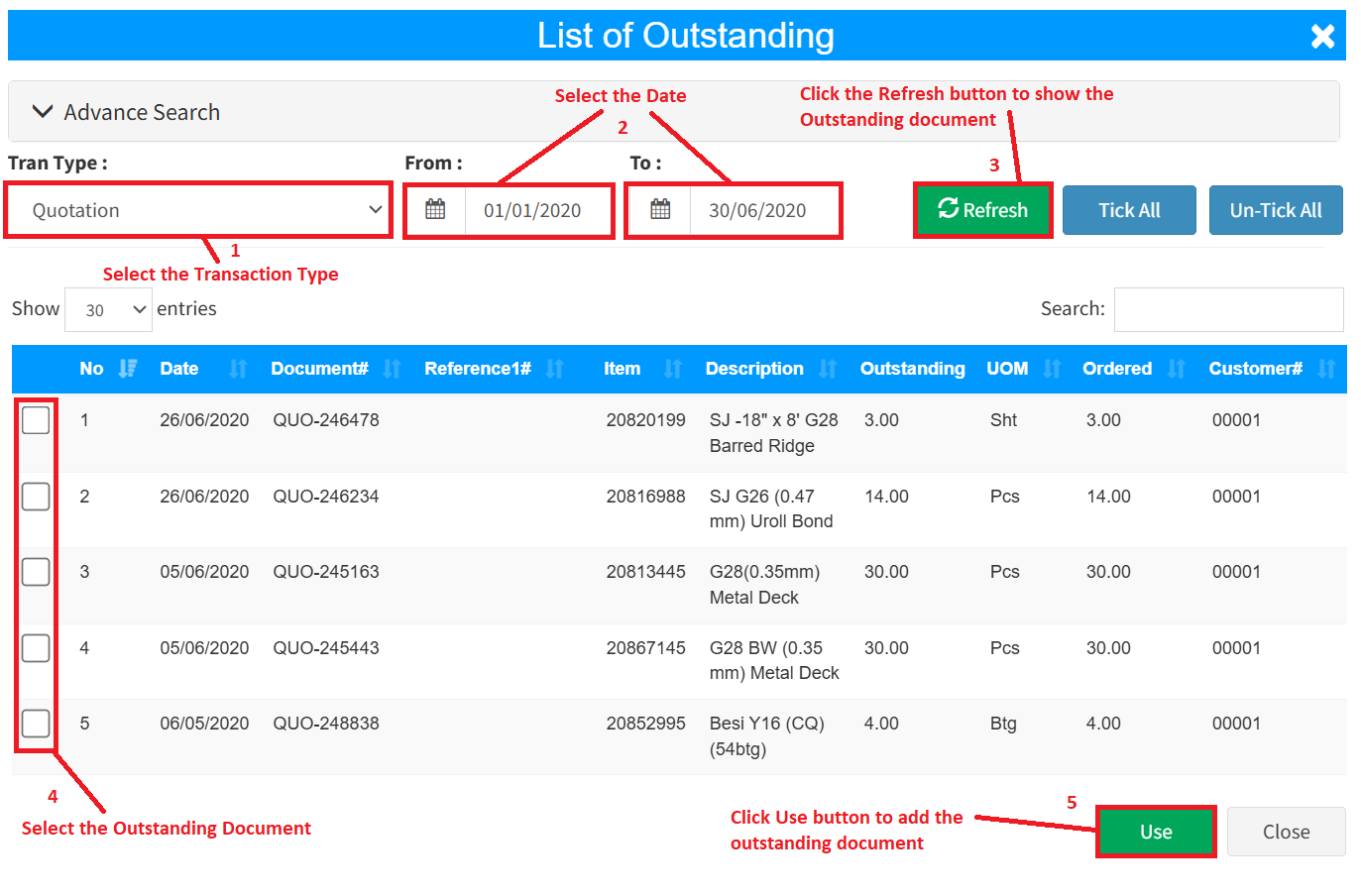
Step 4 (optional): If you want to retrieve the quotation detail, outstanding sales order, or proforma invoice detail, click the Outstanding button. On the List of Outstanding screen, select the Transaction Type and the document date period. Click the Refresh Button to show all outstanding documents you chose, then tick the outstanding checkbox you want to retrieve. Click the Use button to retrieve the outstanding document.
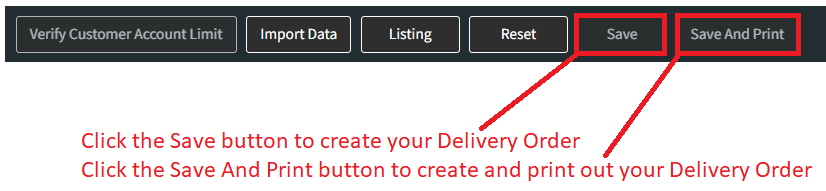
Step 5: On the bottom right, click the Save button to create your delivery order, or click the Save and Print button to create and print your new delivery order simultaneously.
Conclusion
In conclusion, a delivery order is an essential document that facilitates the smooth transfer of goods from seller to buyer. While it is not a financial document, it plays a critical role in inventory control, order fulfillment, and customer service. By accurately recording the details of each delivery, businesses can ensure proper tracking, reduce disputes, and support timely and accurate invoicing—making the delivery order an important part of the overall accounting and logistics process.
Powered By: SKYBIZ ®